

You love history. I can tell from the stack on your nightstand. Waterloo, the Medicis, the civil rights movement, whatever your corner of it is, you read people across time. And yet sports history has always felt closed to you, like a club that checks for a membership card you never got. The books seem written for men who can recite 1975 batting averages and who watched every race live. You opened one once. The author tossed around names and eras as if you had grown up with them, and you set it down after twenty pages. That is not a failure on your part. Laura Hillenbrand wrote the book that got me past that exact wall, and every step below is how you get past it too.
The mistake is thinking sports history is about the sport. The books that last are not, and Seabiscuit proves it on nearly every page. Seabiscuit is not really a book about horse racing. It is a book about a small, knobby horse nobody wanted, a car dealer who lost his son and rebuilt his life around a horse nobody else believed in, a trainer who had learned to say one word, wait, and a jockey who raced half blind with a body that had been broken and beaten all its life. Hillenbrand built her reputation on the rule I am about to hand you, and it is the whole reason the book has sold the way it has.
Start With the Friendliest Door in Sports History
If you have never finished a sports history book, this is the one to try. Seabiscuit holds a 4.6-star average across more than 4,700 reader ratings, and the story reads like a novel you forgot you were assigned.
Amazon Check Today's Price on Amazon →The Rule Worth Writing in the Front Flap
Here it is. A great sports history is a people story with a scoreboard attached. Film and television gave us highlights, which are the sport with the people cut out. A good historian does the reverse, she restores the people and lets the event be the payoff. That is why Seabiscuit travels so well. You never need to know a furlong from a finish line, because the tension never lives in the rules. It lives in a horse that was too small, a country that needed something to cheer for, and people who refused to give up. The race is the reward at the end of the story, not the reason for it.
Hold that rule and the five steps below almost take care of themselves. Each one is small, and each one uses habits you already own from reading history and biography. None of them require you to start watching sports on Sundays. I have been reading sports history for thirty years and I still only watch an occasional game with one eye.
Step 1: Read the People Before You Learn the Rules
You do not need the rulebook to follow Seabiscuit, and that is rare enough to prize. The stakes are plain, a horse and a rider going as fast as they can around a dirt track. Everything else Hillenbrand hands you in story form, never as reference. Meet Red Pollard and you learn him the way you would meet a character in a novel, his luck, his pride, his ruined body. By the time he first climbs aboard the little horse, you are already anxious for both of them.
Make that your general habit for any sports history from here on. When a new name appears, resist the urge to treat it like homework. Let the author introduce the person the way a novelist would, and borrow that person's feelings until the book gives you a reason to change your mind. A sports history is a biography with a scoreboard attached, and biographies are your native territory. You have been reading them for decades.
You will also notice that the book treats insiders gently. Hillenbrand never assumes you grew up around a track. When a piece of racing terminology matters, she slides the meaning in without breaking stride, and when it does not matter, she leaves it out. That is the hallmark of a history written for readers rather than for the sport itself, and it is the reason so many people read Seabiscuit as their first sports history and then go hunting for the author's next book.
Step 2: Give Yourself Permission to Skip
Here is what nobody tells you, because publishers would rather you believed every page is gold. Some pages are not, even in a masterpiece. Seabiscuit carries a long middle passage about the business of 1930s racing, claiming rules and owner politics and racing-association meetings, and for a first-time reader that is the stretch where attention can flatten. Skip it. Read ahead through a chapter and the story will still be waiting for you.
Fifteen pages onward, Hillenbrand always climbs back onto the rails. The book is generous that way, long enough that you will never feel the pages you skipped. This single habit is the biggest difference between people who finish sports histories and people who quietly give up at chapter six. It has nothing to do with intelligence and everything to do with permission, so grant it to yourself before you turn to page one.
One more thing on this step. Skipping is not cheating and it is not a slight against the author. Every serious reader of history does it, and pretending otherwise is how people teach themselves to abandon books. A book you skip through with delight is better than a book you force yourself through with duty, and the writer would far rather have you at chapter twelve loving the story than stranded at chapter five and gone.
Step 3: Anchor to One Thread and Follow It
Try to hold the whole book in your head at once and you will drown. Every great sports history braids several stories together, the horse, the owner, the trainer, the jockey, the country. Choose one thread to hold on to and let the rest wash over you. In Seabiscuit, most first-time readers choose the jockey. Red Pollard started with nothing, raced injured for years, lost his nerve and nearly lost his life, and his story carries more human weight than any hoofbeat in the book.
If it helps, write one line on a notecard and tuck it in the back flap: the story I am following is Red. Then when a chapter opens on someone else, you can float through it at low effort, confident the thread will pick back up. Hillenbrand hands the narrative back to Pollard at the top of the next chapter and your footing returns the moment you cross the page. That is the design. Use it.
Step 4: Read for the Big Human Moments, Not the Scores
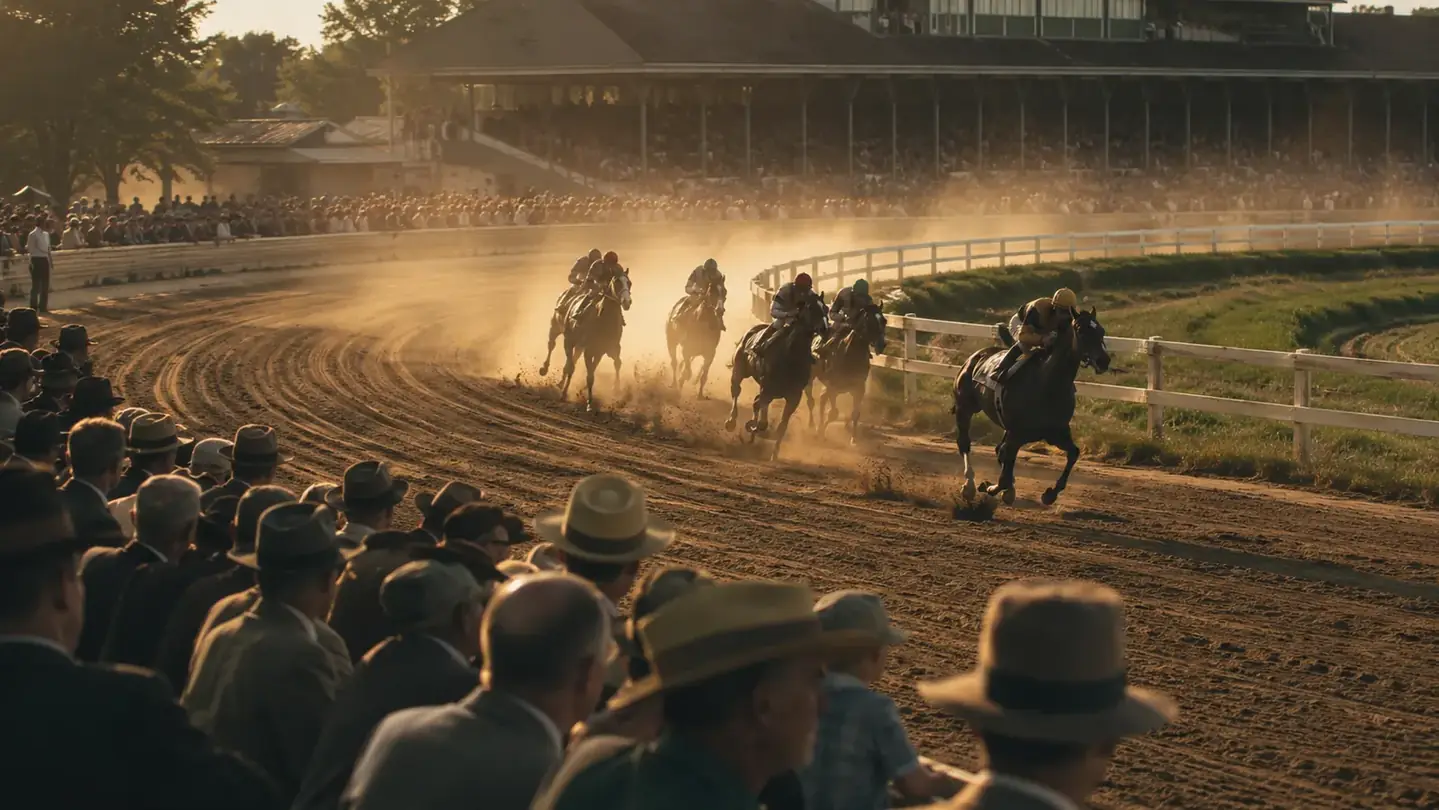
Here is the part of sports history that converts reluctant readers. The result is never the point. You already know how the famous 1938 match race turns out, the small horse beats the mighty War Admiral, and somehow it does not spoil a thing. Hillenbrand makes it tense anyway, because by then you are carrying ten chapters of worry for the horse and the bruised people behind him. That is craft, and it is exactly what a sports history book should do for you.
Watch for the moments that have nothing to do with winning. A father who buried his son and then put everything he had left into a crooked-legged horse. A country eating through the Depression and walking out to a track on a Saturday afternoon to cheer for an underdog that looked the way most of them felt. When a book gives you those moments, history is hitting you where it is supposed to, and the sport has become the setting, not the subject.
Step 5: Let One Book Hand You the Next
The last step is the one that turns a single good read into a whole shelf. Every great sports history is full of doors. Seabiscuit introduces you to the far side of the rivalry, the racehorse everyone thought was unbeatable, and the two of them together are their own story. Hillenbrand spent years in the archives, and every name she rescued from the old newspapers is a door you can walk through later if you like.
When you close the book with three or four names you now care about, write them down. That is next winter's reading list, and it solves the hardest question a reader faces, which is what to read next. Hillenbrand even closes the book with a generous section of sources for readers who want to go deeper. But here is the part worth saying twice. You are under no obligation to go anywhere. Making it through your first sports history is the entire assignment, and the next book will pick itself the moment you care about someone in this one.
A sports history is a biography with a scoreboard attached, and biographies are your native territory. You have been reading them for decades.
What Else Helps
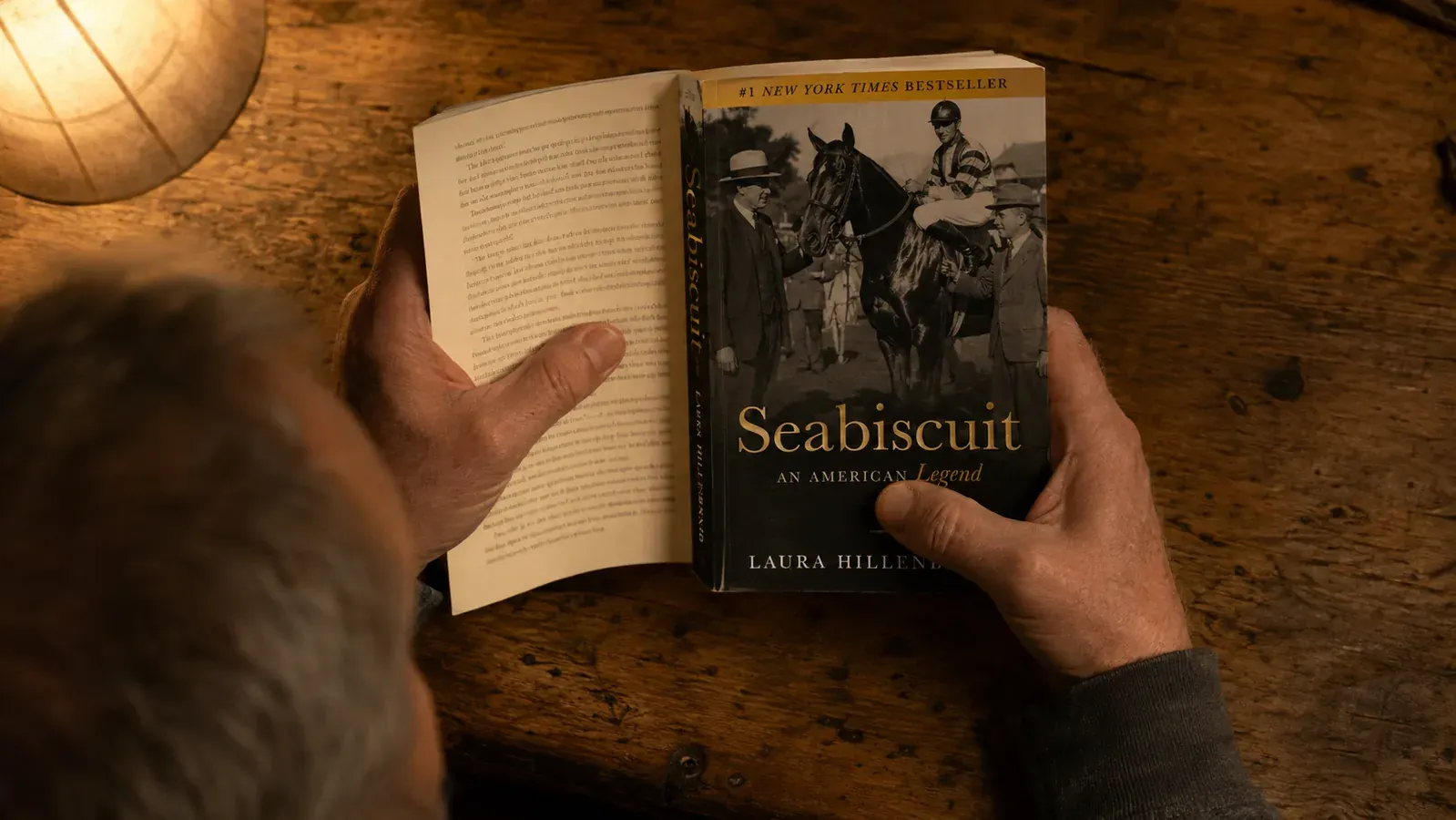
A comfortable chair and no phone within reach. Sports history rewards a long unbroken stretch, because the payoff builds across chapters rather than paragraphs. A bookmark you are willing to move backward once in a while helps too, since a scene worth rereading turns up in every good book. And one honest warning. Come at it with a reading pace, not a mission. Treat Seabiscuit like an assignment and you will finish it the way people finish obligations, dutiful and unchanged. Read it the way you read any history you already love, dinner cleared, one chapter, the lamp low, and the book does the rest of the work.
For readers who are still nervous, the 1930s deserve a special mention. Despite the hard times, the decade is rich territory for a history reader, with radio, newspapers, and photographs preserving far more of it than many earlier eras. Seabiscuit caught a nation at the moment it needed a reason to feel lucky, and reading it now gives you both sides of the coin at once, the country and the horse. You are reading social history and sports history in the same chapters, which is the best deal the genre offers.
Where Seabiscuit Asks Something of You
I want to be straight about the parts that cost some readers, because no book is five stars for everyone. Hillenbrand's is a full-length history, long and careful, and a reader who wants to zip through it in a weekend will feel the middle stretch. The racing-business chapters I told you to skip are genuinely dry on a first pass, and skipping them asks you to trust that your thread will pick back up. Her sentences can run formal, a historian's discipline rather than a novelist's looseness. None of this stops me from pressing the book on friends who claim to love history but have never tried sports. It just means you read it the way I described in step two, with permission, not as a test of endurance.
The Book That Changed How I Read Sports History
If you have ever loved a history book and assumed sports were closed to you, this is your way in. It holds a 4.6-star average across more than 4,700 ratings for a reason. Pick it up at today's price and start chapter one tonight.
Amazon Check Today's Price on Amazon →