

Every winter I tell myself the same thing: this is the year I finally read the big baseball history book, the one that explains the men behind the box scores I grew up memorizing. And every spring I end up with a stack of half-finished stat guides on the nightstand and no more wisdom than when I started. I wanted a book that read like a story and felt like a conversation with someone who had actually watched all these men play. So when my brother handed me Joe Posnanski's The Baseball 100 last October, I decided to do it properly. I would read it the way the game is actually played, one chapter a night, spread across a whole season, and report back honestly.
The book is exactly what the title promises: one hundred essays about the hundred greatest players in baseball history, each one a few pages long, arranged in a ranking that starts arguments on purpose. But the reason I kept going past chapter five had almost nothing to do with the ranking. It had to do with the way Posnanski writes about people, which is the thing a reader who loves history is actually hungry for.
The Quick Verdict
A warmly told, honest history of baseball that you read one chapter a night and keep on your shelf for years. Posnanski's best writing, even if the ranking will frustrate you and a few modern-player chapters retread what you already know.
Amazon Check Today's Price →A Season of Baseball History, One Chapter at a Time
If you want a baseball history book that reads like a story instead of a stat sheet, this is the one I reached for every night for nine months. See what it costs today and whether it belongs on your shelf.
Amazon Check Today's Price on Amazon →How I Used It
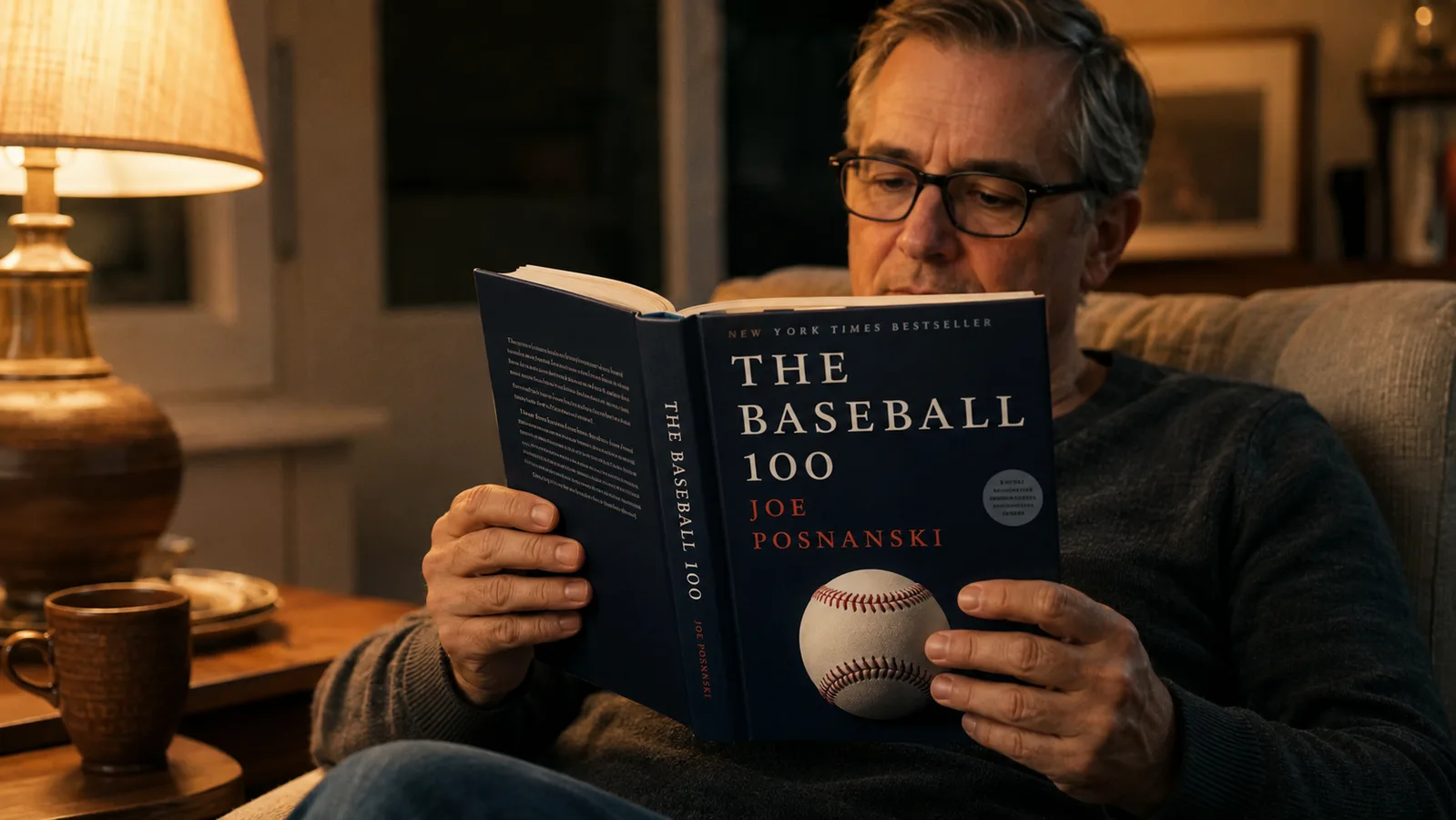
I started The Baseball 100 on a Tuesday evening last October, in the chair by the window where I do most of my reading. The rule I set myself was simple: one chapter a night, in order, no skipping ahead to find my favorites. Some chapters run five or six pages and others a bit more, and most nights that felt exactly right for a half hour before bed. By January I had worked through the first half of the list, and by the time the season opened in the spring I was into the top twenty and reading slower on purpose, because I did not want it to end.
The one thing I want to be straight about is that I am not a stats person. I never kept a spreadsheet, I do not care about citeable WAR totals, and I did not take notes in an app. I read with a pencil and the kind of paper bookmark you get free from a bookstore. That turned out to be exactly the right way to read this book, because the chapters are built around stories and moments, not numbers. When a number does appear, Posnanski makes you feel why it mattered to the men on the field, which is a very different thing from reciting it.
What surprised me over a full season of reading is how much the book changed the games I watched that summer. I would see a modern player do something and find myself thinking about the chapter on the man from sixty years ago who did it first. That is the long game of a book like this, and it is why I kept it on my nightstand instead of finishing it in a single impatient week.
What This Book Actually Is
Strip away the scale and The Baseball 100 is a collection of one hundred short biographies, each one built around what Posnanski finds most interesting about a single player. Because he is a storyteller first, the essays are not lists. Willie Mays gets a chapter about the joy he brought to the game. Satchel Paige gets one about the mystery and the showmanship. Ted Williams gets the chapter that made me put the book down and just sit there for a minute.
The ordering matters, but not the way you might expect. Posnanski has said the list is built to start arguments, and it does. Fans will check their own favorites the way you check a scoreboard, then stay for the writing. That is the trick of the whole book. If it were only a ranking you could look up in an afternoon, nobody would keep it on their shelf. The arguments are the doorway, and the essays are the house.
The book covers the full sweep of the game, from the early twentieth century right up to players still active, so the whole history sits between one set of covers. For a reader who wants to finally understand the eras before their own, that is the appeal. You are not buying a guide to one team or one decade. You are buying the whole story, told a single life at a time.
The Writing Is the Whole Point
I have read a fair amount of sports history, and most of it falls into two camps: the dry reference book that hands you facts, and the breathless hagiography that tells you everyone was a saint. Posnanski does neither. He writes about these men the way you would talk about a grandfather or a favorite uncle, with affection that does not excuse their flaws. The result is the rarest thing in sports writing, a book that is both honest and warm at the same time.
The chapter on Rickey Henderson made me laugh out loud, which I did not expect from a history book. The chapter on Roberto Clemente stays with me in a different way, and the long look at Babe Ruth works because it treats him as a complicated man and not a cartoon. The chapters on the earlier eras, where there is distance, are where Posnanski turns a record into a story and gives you something a stat sheet never could.
That brings me to the honest tradeoff I promised to report. The book shines brightest on the earlier eras. The chapters on players from my own lifetime, whose careers I watched myself and know cold, felt a little closer to a recap. I am glad I read them, but I did not learn much I did not already know. It never made me want to stop reading, but it did make me appreciate how much harder it is to write with fresh eyes about a man whose games I watched in real time.
How It Compares to the Baseball Histories I Already Own
I keep a row of baseball books on the middle shelf, and The Baseball 100 fits into a gap none of the others filled. The encyclopedias give me the records when I need a fact for an argument, and they have their place. But they do not keep me company on a Tuesday night. This is the one I actually reach for. If you have ever owned a fine sports encyclopedia that you used twice and then shelved, you already understand the difference I am describing.
The closest comparison is a biography of a single player, and I want to be fair about it. A great single-subject biography goes deeper into one life, and for your very favorite player you will still want that. What this book gives you instead is the whole sweep of the game in one volume, a hundred lives sketched in exactly the right amount of space each. For a reader who wants the full history without buying twenty separate books, it is the economical choice, and not only in money.
There is also a question of how you like to read, and it took me a while to put my finger on it. Some nights I wanted a long, sinking dive into one story, and some nights I wanted to cover ground. This book served both moods, which is not something I can say for most of the history on my shelf. On the nights when I only had twenty minutes, one chapter was enough. On the nights when I had the house to myself, two or three chapters went by before I looked at the clock.
The chapters on the earlier eras are where Posnanski turns a record into a story and gives you something a stat sheet never could, and that is why I kept the book within reach of my chair all summer.

Where the Book Earns a Permanent Place on the Shelf
This is the part my gift-buyer brain cares about, because I buy books for my family the way other people buy tools. The Baseball 100 is my current answer for the fan in your life who already owns the obvious books. My brother, the one who handed it to me, is the most casual fan in our family and he read every chapter. My father-in-law, who watched these exact players in real time, rereads the essays out of order whenever a name comes up in the news.
A book you reread out of order is a book worth owning, and that is a rare thing in this niche. Most sports history is read once and passed along. This one sat within reach of my chair all summer, and the chapters stand up to being dipped into as much as read straight through. That versatility, reading it cover to cover or dropping into a single essay on a whim, is the strongest recommendation I know how to give a book.
What I Liked
- Reads like a warm conversation, not a reference manual
- One hundred self-contained chapters, perfect for reading a few pages a night
- Honest about its subjects, flaws and all
- Built for rereading out of order, a true keeper
- A strong gift for both casual and serious fans
Where It Falls Short
- The ranking is deliberately arguable and may frustrate you
- The chapters on modern players add little if you watched them live
- At well over a thousand pages it is a commitment, not a quick read
- Not a citable reference if you need exact sourcing for every detail
Who This Is For
If you are the kind of reader who wants to sit down in the evening and be carried by a story instead of fed a stat line, this is your book. If you grew up watching baseball in the fifties, sixties or seventies and you want to understand the eras before your own, it will give you years of reading. And if you are looking for a gift for a fan who has everything, this is the book that surprised my whole family, the casual readers included. Nobody in my house put it down once they started.
Who Should Skip It
If you want a definitive, exhaustively sourced reference you can cite on every detail, spend your money on a proper encyclopedia instead. If you cannot commit to a long book and want to finish something in a weekend, this one will sit half-read on your nightstand. And if your interest in baseball history begins and ends with strict statistics, the narrative approach here will likely feel like too much storytelling and not enough data. That is not a flaw in the book. It just means it is not for everyone.
My Bottom Line After a Full Season
After nine months of reading it one chapter at a time, I can say The Baseball 100 did what I hoped a baseball history book would do, and a little more. It gave me the whole story of the game I grew up loving, told by a writer with affection and honesty in equal measure, and it made me a better watcher by June. It is not perfect, and I have told you exactly where it is not. But it is the book I kept reaching for all year, and the one I will hand to the next fan who asks what to read.
I will also say this about the gift side of things, because it matters in my house. I have given a lot of sports books over the years, and most of them get a thank you and a spot on a shelf. This one got texted about. My brother sent me a message three chapters in, my father-in-law called about the Satchel Paige essay, and my nephew borrowed it for a week and finished it faster than I did in nine months. When a history book does that to three generations of one family, it has earned the place I keep it in.
Bring Baseball History to Your Shelf Tonight
The Baseball 100 is the book that kept me company through a full season, and it is the best gift answer I have for the fan who has everything. See the current price and check for yourself.
Amazon Check Today's Price on Amazon →