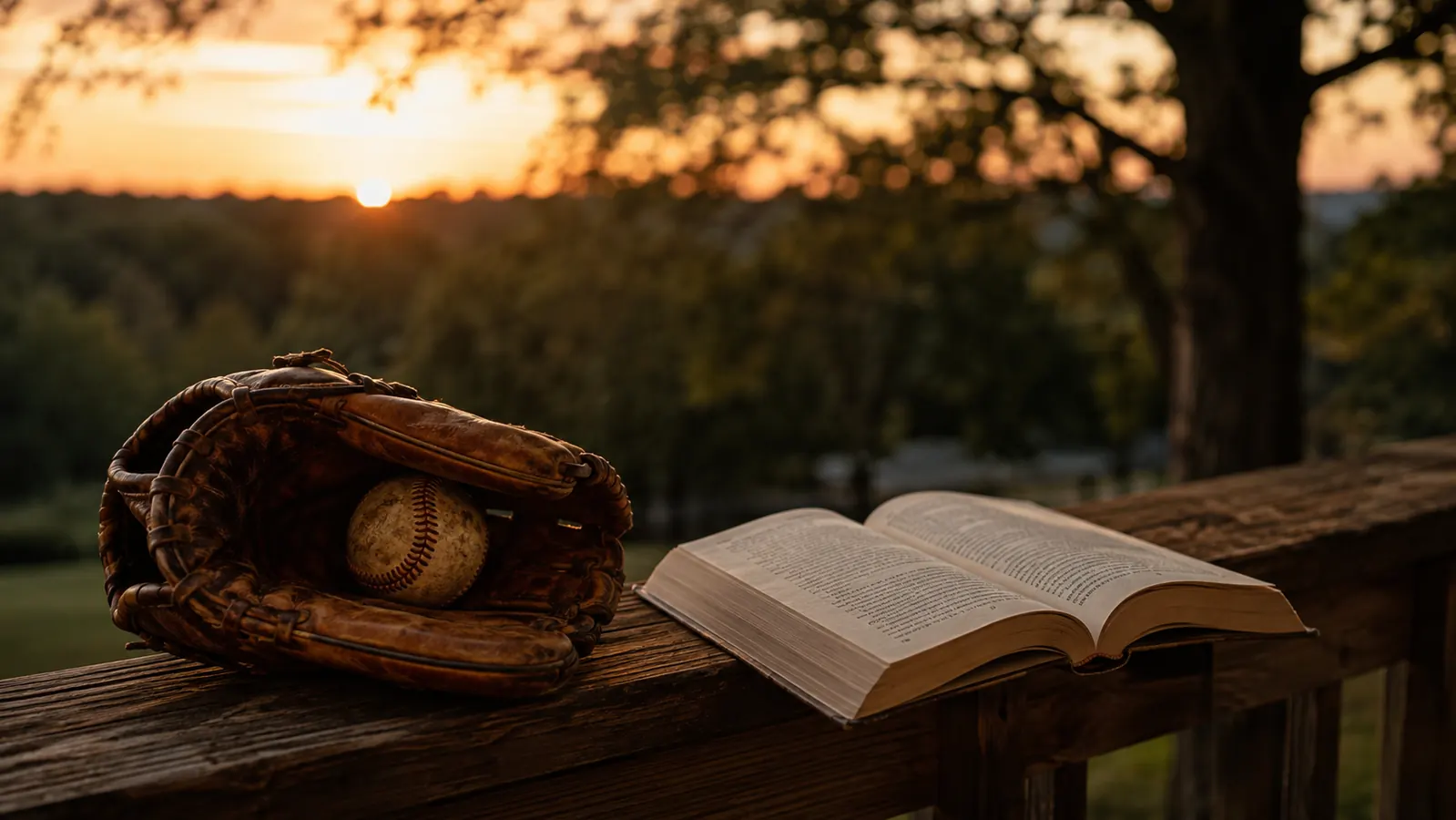
The glove sat on the top shelf of my garage closet for thirty years. Stiff as a board. Laces cracked, the pocket no deeper than my thumb. It belonged to my dad, though he never once said it aloud. On a Tuesday night my son, home for a long weekend, reached up and pulled it down just to see what was up there.
That is how the three of us ended up out on the porch steps, holding the same old leather, when my son asked the question I had spent three decades stepping around. What do you remember about Grandpa? Not the way he was at the end. The way he was before. I told him about the radio games and the summer evenings and the way my father could call a batter's swing before the pitch ever left the mound. And then I told him I had finally found a book that put a name to all of it: Joe Posnanski's The Baseball 100.
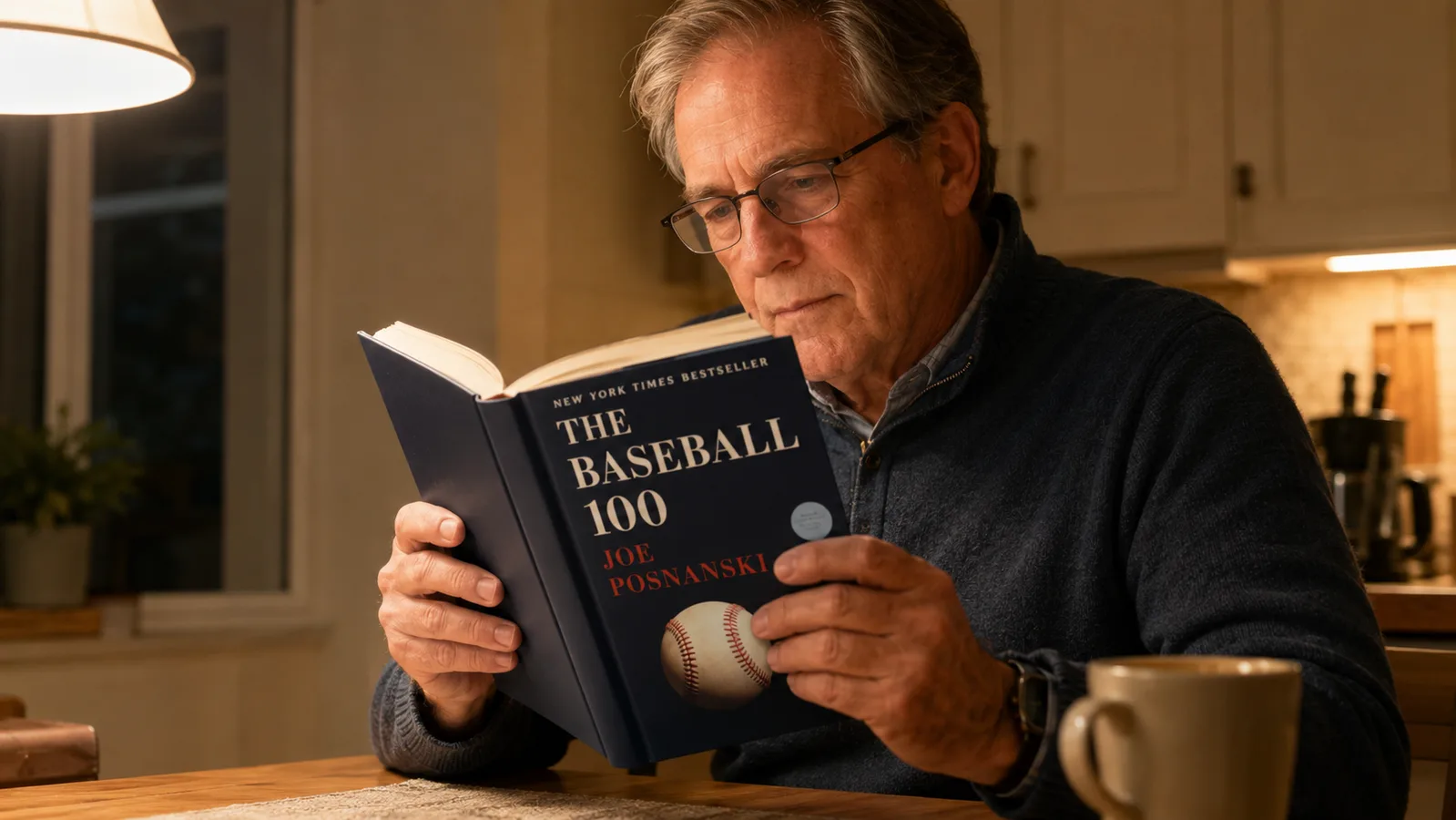
A friend in my book club had pressed it on me, said start with the chapter on Willie Mays and you will not stop until you have read all one hundred. I did not listen. I started with Satchel Paige, because my dad loved the old barnstormers, and that was the mistake that cost me my whole evening.
The Baseball 100 is not a ranking that settles arguments, though Posnanski happily starts plenty of them. It is a story told one man at a time, a hundred small biographies that chain together into a hundred and fifty years of the game. You meet a pitcher who threw before the Model T and a slugger who played deep into the television era, and somewhere along the way the whole sport stops being a list of records and becomes one long conversation.
Somewhere along the way the whole sport stops being a list of records and becomes one long conversation.
Find a Way Back to the Game You Grew Up With
If you have a fan in your life and the words have run dry, this is the book that hands both of you somewhere to stand. Check today's price on Amazon before your own Tuesday evening gets away from you.
Amazon Check Today's Price on Amazon →Here is what surprised me most. My son has never cared much for baseball, not once, not even as a kid. And yet he read over my shoulder for twenty minutes before he asked a single question. When I reached the chapter on Rickey Henderson, I handed the book over and said start here. An hour later he was laughing out loud on the porch at a grown man who spent his whole career convinced spring training should have paid him a salary.
The book became the thing we did together for the rest of the weekend. He read a chapter, my wife read one, I read the rest, and we passed it around the kitchen table like a magazine. Nobody argued about who was ranked too high or too low. We argued about the men themselves, about which one you would want in a pennant race and which one just made you smile.
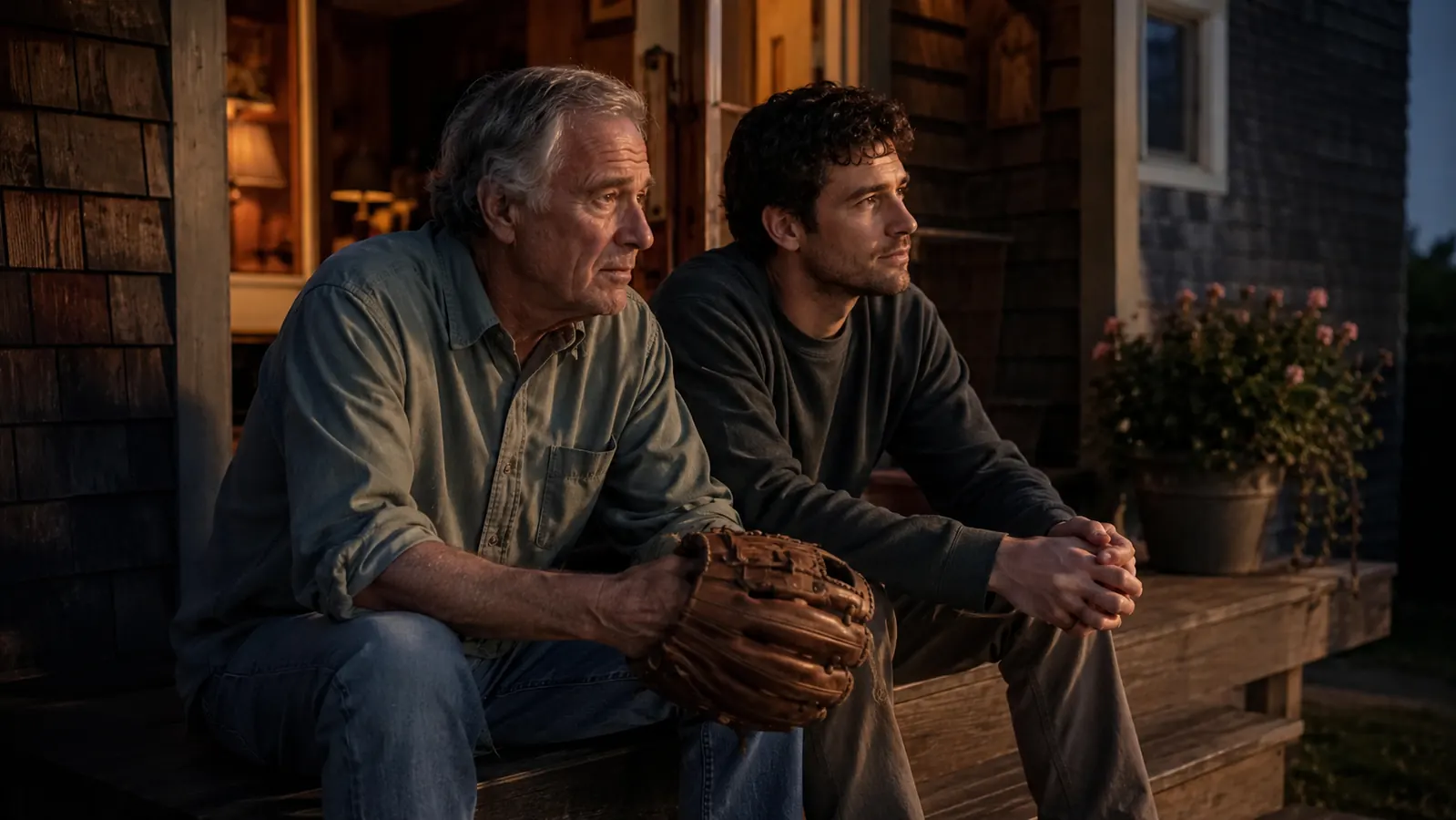
The second night I caught my dad's glove in my hands and it did not feel like a relic anymore. It felt like the same living thing it had been when he used to toss it to me in the backyard, long before the stretch of years when we barely spoke. I do not know exactly when I stopped caring about baseball or when I started, but somewhere in those hundred chapters I got the old feeling back.
That Monday I drove back out to the ballpark. Just a minor league park an hour away, cheap seats, the kind of place my dad used to take me when I was nine. I took my son. He asked whether the book had anything about the second baseman we were watching, and I said he had been leaning on me all week to call him. He knows how to talk to me now. He learned it from a book about men mostly gone before he was born, and I cannot explain that, and I do not have to.
The gift angle surprised me more than the reading did. Once I saw what it was doing on my own porch, I sent a copy to my brother and to a nephew who swears he only cares about modern baseball. Both of them read it. Both called me about the same essay on Willie Mays, which is when I understood the book is not teaching facts so much as handing out a shared vocabulary. If you have a fan in your family you have stopped being able to reach, this is the one to leave on the kitchen table, not the book for the person who already owns a shelf of stats.
What I'd Tell You If We Were Sitting at My Kitchen Table
So here is what I would tell you over coffee, knee to knee. If there is someone in your life you have quietly lost the thread with, no book is a substitute for the hard work of staying in the room. The Baseball 100 will not fix a single conversation by itself. It is a slow book in places, and Posnanski will happily remind you it is not a quick summary. But it gave my son and me a shared language, a way to sit side by side that did not require either of us to say the hardest thing first. It asks nothing of you but an evening and a chair. Joe Posnanski set out to write a history of the game. What I found in those pages was a way back to my father, and an evening with my son I will not trade for anything.
Some Books Just Sit on the Shelf. This One Starts Conversations.
Whether it is a gift for your dad or a way to reconnect with your own baseball-mad kid, this is the one that earns its place. See what it costs today.
Amazon Check Today's Price on Amazon →